



High Precision Casting Trends
With the rapid development of modern manufacturing, industries such as automotive, aerospace, sanitary hardware, and industrial equipment are demanding higher precision, better surface quality, and more stable production efficiency. As a result, high-precision casting technologies are becoming increasingly important in the global foundry industry.
Advanced casting processes and automated equipment are helping manufacturers produce complex metal components with tighter tolerances and fewer defects.
- What Is High Precision Casting?
High-precision casting refers to manufacturing processes that produce metal parts with high dimensional accuracy, smooth surface finish, and minimal machining requirements.
Typical high-precision casting technologies include:
- Low Pressure Die Casting (LPDC)
- Gravity Die Casting
- Investment Casting
- High Pressure Die Casting
These processes are widely used for producing brass faucets, automotive components, valve bodies, pump housings, and precision mechanical parts.
- Key Trends in High-Precision Casting
- Automation and Smart Manufacturing
Automation is transforming traditional foundries into smart manufacturing facilities.
Modern foundries are increasingly adopting:
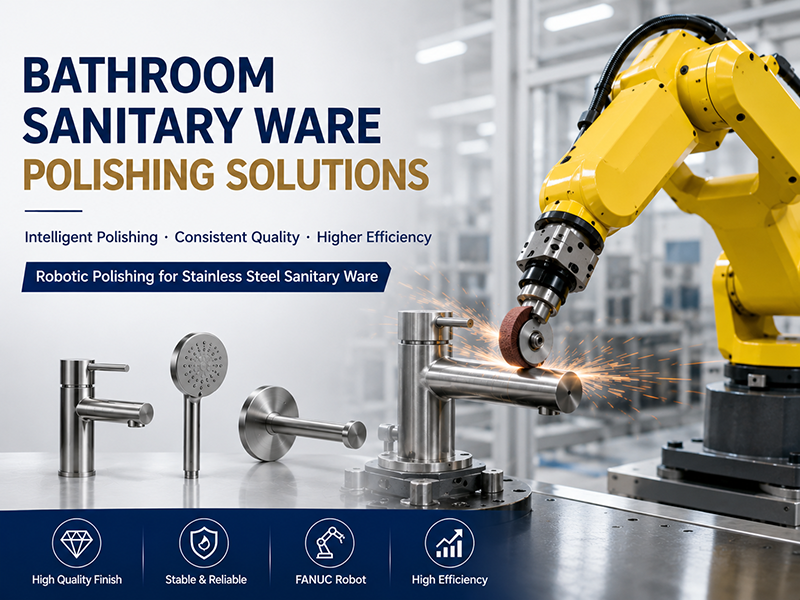
- robotic grinding and polishing systems
- automated casting machines
- intelligent temperature and pressure control systems
These technologies help reduce labor costs and ensure consistent product quality.
- Improved Mold Technology
High-precision casting requires high-quality molds with excellent dimensional accuracy.
New mold technologies include:
- CNC precision mold machining
- advanced mold coatings
- improved cooling systems
These improvements significantly enhance casting accuracy and reduce defects.
- Digital Process Control
Digital control systems are becoming a key part of high-precision casting.
Manufacturers now use sensors and software to monitor:
- molten metal temperature
- casting pressure
- filling speed
- mold temperature
This data helps engineers optimize the casting process and reduce porosity, inclusions, and other defects.
- Integration of Casting and Post-Processing
Modern foundries are integrating casting with automated finishing processes.
Examples include:
- robotic grinding and deburring
- automatic polishing machines
- CNC finishing processes
This integration improves production efficiency and reduces manual operations.
- Advantages of High-Precision Casting
High-precision casting provides several major advantages for manufacturers.
- Higher Product Accuracy
Precise casting processes reduce dimensional deviations.
- Better Surface Quality
Castings often require less machining or polishing.
- Reduced Production Costs
Improved processes reduce scrap rates and material waste.
- Higher Production Efficiency
Automation and process control significantly improve productivity.
- Future Outlook of Precision Casting
The future of casting technology will focus on:
- intelligent manufacturing
- energy-efficient equipment
- automated production lines
- high-precision mold technology
Companies that invest in advanced casting equipment and automation systems will gain a strong competitive advantage in the global market.
- Conclusion
High-precision casting is becoming an essential part of modern manufacturing. By adopting advanced casting technologies, intelligent process control, and automated finishing equipment, manufacturers can significantly improve product quality and production efficiency.
As industries continue to demand more complex and high-quality metal components, the development of high-precision casting technologies will continue to accelerate.